Hawkins v. McGee
New Hampshire Supreme Court
146 A. 641 (1929)
- Written by Megan Petersen, JD
Facts
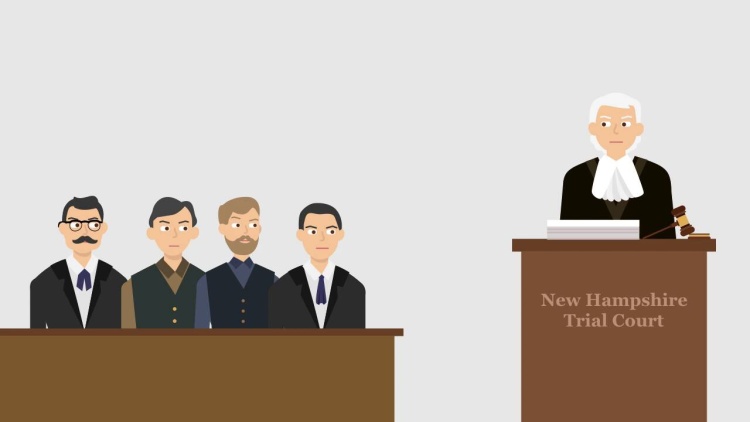
A burn left child George Hawkins (plaintiff) with scar tissue on his right hand. Nine years later, surgeon Edward McGee (defendant) operated on Hawkins’s hand, replacing the scar tissue with a skin graft from Hawkins’s chest. The graft left Hawkins with a palm that grew chest hair. Hawkins sued McGee, seeking damages for an alleged breach of warranty. Hawkins and his father claimed that McGee had been seeking to experiment with skin grafts and multiple times solicited Hawkins’s father’s consent to the operation. They further claimed that when seeking such consent, McGee said, “I will guarantee to make the hand a hundred per cent perfect hand or a hundred per cent good hand.” McGee argued that even if he said such words, no contractual warranty arose because no reasonable man would understand the words as creating a contract. The trial judge determined that the jury should decide whether a warranty existed and, if so, the appropriate damages for its breach. The judge instructed the jury that any damages should be based on (1) Hawkins’s pain and suffering from the operation and (2) the worsened condition of Hawkins’s hand in relation to its preoperation state. The jury held that a warranty existed and awarded $3,000 in damages. The trial judge deemed the damages excessive. When Hawkins refused to remit the portion exceeding $500, the judge set aside the verdict. Hawkins appealed.
Rule of Law
Issue
Holding and Reasoning (Branch, J.)
What to do next…
Here's why 964,000 law students have relied on our case briefs:
- Written by law professors and practitioners, not other law students. 47,500 briefs, keyed to 1,006 casebooks. Top-notch customer support.
- The right amount of information, includes the facts, issues, rule of law, holding and reasoning, and any concurrences and dissents.
- Access in your classes, works on your mobile and tablet. Massive library of related video lessons and high quality multiple-choice questions.
- Easy to use, uniform format for every case brief. Written in plain English, not in legalese. Our briefs summarize and simplify; they don’t just repeat the court’s language.
- AI-generated podcast version of every brief — listen on the go, between classes, or whenever reading isn’t an option. New
Understand your casebook readings in seconds
Use our case briefs to comprehend your casebook readings faster, supplement your notes and outlines, and outshine your peers in class.
Get instant access to over 47,500+ expert-written case briefs in a searchable database keyed to 1,006 law school casebooks.