



Play video

Statutory Mergers

Learn about long-form mergers, the traditional merger structure requiring shareholder approval, and short-form mergers, which eliminate the need for a shareholder vote of approval.

Transcript

The two main types of deal structures in M&A are acquisitions and mergers. A merger is a transaction through which two or more companies become one. Most mergers are statutory—that is, they’re specifically defined by state law. State merger statutes generally provide for two types of mergers: long-form and short-form.

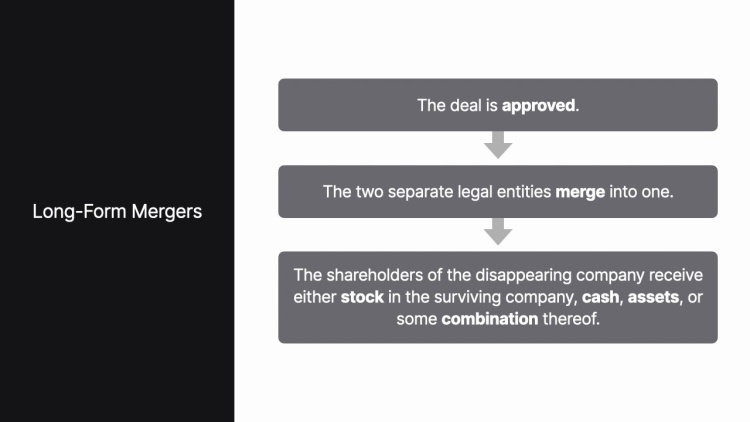
I. Long-Form Mergers

In a traditional long-form statutory merger, the parties negotiate a deal, the boards of directors approve the deal, a regulatory review...

Lessons

1. Welcome to Mergers and Acquisitions
  • Welcome to Mergers and Acquisitions
2. Introduction to Mergers and Acquisitions
  • M&A Laws
  • Key Players
  • The Decision to Do the Deal
3. M&A Transaction Structures
  • Statutory Mergers
  • Equity Sales
  • Asset Sales
  • M&A: Tender Offers
  • Tender Offer Rules and Regulations
  • Proxy Contests
4. The M&A Deal Process
  • Valuation
  • First-Step Agreements
  • Due Diligence
  • Getting the Shareholder Vote
  • The Appraisal Remedy
5. The Definitive Agreement
  • Price and Consideration
  • Representations and Warranties
  • Covenants, Conditions, and Termination
6. Securities and Antitrust Considerations
  • Securities as Consideration
  • Securities Registration Exemptions
  • Hart-Scott-Rodino Act
7. Deciding to Sell and Conflicted Transactions
  • The Decision to Sell
  • Conflicted Transactions
  • Controlling Shareholder Transactions
8. Defending Against Hostile Takeovers
  • Preemptive Defenses
  • Other Takeover Defenses
  • The Decision to Defend the Company