



Play video

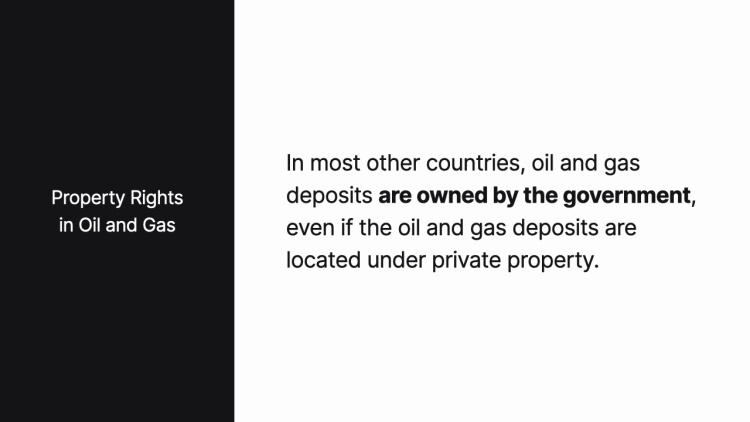
Property Rights in Oil and Gas

Learn about the rights of ownership over subsurface oil and gas in the United States.

Transcript

I. Sources and Uses of Oil

Crude oil, also known as petroleum, is a naturally occurring energy-dense liquid hydrocarbon. Oil is known as a fossil fuel because it is formed from fossilized plants and algae that existed millions of years ago. Most oil that is extracted in the United States is refined into petroleum products, including diesel fuel, gasoline, and oil used to heat homes and businesses. Oil can also be used to manufacture plastic products and fertilizers.

Oil can be classified as...

Lessons

1. Welcome to Energy Law
  • Welcome to Energy Law
2. The Energy Industry and Electric Utilities
  • The Electric System
  • Renewable Energy and Climate Change
  • Utility Regulatory Compact
  • Public-Utility Commissions
  • Wholesale Electricity Markets
  • Federal Electricity Regulation
3. Coal-Fired Electricity
  • Property Rights in Coal
  • Coal Mining Regulations
  • Coal-Fired Power Plant Emissions
  • Coal’s Decline in Popularity
4. Oil and Natural Gas
  • Property Rights in Oil and Gas
  • Fracking and Offshore Drilling
  • Transporting Oil and Gas
  • Oil and Gas Markets
5. Nuclear Energy
  • History of Nuclear Power
  • Uranium Mining
  • Risks of Nuclear Power
  • Nuclear Waste
  • Federal Support for Nuclear Energy
6. Wind Energy
  • Benefits of Wind Energy
  • Intermittent Nature of Wind
  • Impacts on Wildlife and the Environment
  • Rights to Wind
  • Government Support for Wind Energy
7. Hydropower and Solar Energy
  • Hydropower Facilities and Regulation
  • Environmental Impacts of Hydropower
  • Solar Energy
  • Solar Access and Grid Issues
8. Other Energy Resources and Energy Issues
  • Waste-to-Energy Facilities and Biomass
  • Geothermal and Ocean Energy
  • Energy Efficiency
  • Transportation Energy Policies
  • Energy Storage and Electric Vehicles