



Play video

Transportation Energy Policies

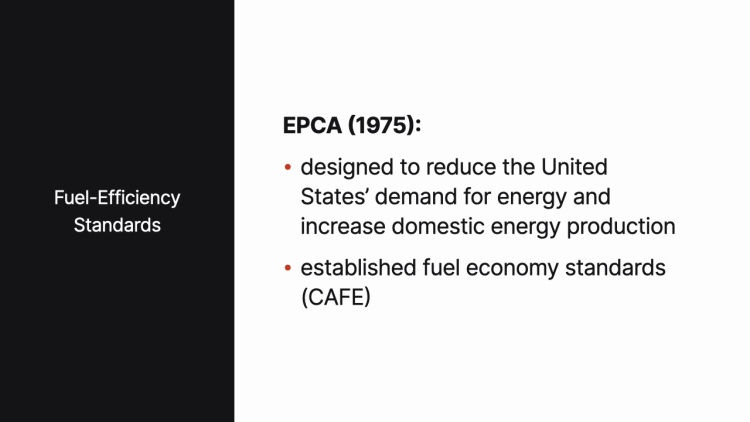
Learn about the federal vehicle-emission standards and federal fuel-efficiency standards that are administered by the National Highway Traffic Safety Administration.

Transcript

Transportation vehicles, including passenger cars and semi-trailer trucks, account for one-third of all the energy consumed in the United States. Because most vehicles are powered by fossil fuels, the transportation sector is also a large source of greenhouse gases. For example, 20 pounds of greenhouse gases are emitted for every gallon of gasoline that is burned. This means that an average passenger car will emit about 5 tons of carbon dioxide every year. The federal government’s...

Lessons

1. Welcome to Energy Law
  • Welcome to Energy Law
2. The Energy Industry and Electric Utilities
  • The Electric System
  • Renewable Energy and Climate Change
  • Utility Regulatory Compact
  • Public-Utility Commissions
  • Wholesale Electricity Markets
  • Federal Electricity Regulation
3. Coal-Fired Electricity
  • Property Rights in Coal
  • Coal Mining Regulations
  • Coal-Fired Power Plant Emissions
  • Coal’s Decline in Popularity
4. Oil and Natural Gas
  • Property Rights in Oil and Gas
  • Fracking and Offshore Drilling
  • Transporting Oil and Gas
  • Oil and Gas Markets
5. Nuclear Energy
  • History of Nuclear Power
  • Uranium Mining
  • Risks of Nuclear Power
  • Nuclear Waste
  • Federal Support for Nuclear Energy
6. Wind Energy
  • Benefits of Wind Energy
  • Intermittent Nature of Wind
  • Impacts on Wildlife and the Environment
  • Rights to Wind
  • Government Support for Wind Energy
7. Hydropower and Solar Energy
  • Hydropower Facilities and Regulation
  • Environmental Impacts of Hydropower
  • Solar Energy
  • Solar Access and Grid Issues
8. Other Energy Resources and Energy Issues
  • Waste-to-Energy Facilities and Biomass
  • Geothermal and Ocean Energy
  • Energy Efficiency
  • Transportation Energy Policies
  • Energy Storage and Electric Vehicles