



Play video

Canons of Statutory Interpretation IV

Learn about substantive or policy-based interpretive canons.

Transcript

I. Introduction

The final group of interpretive canons are those based on constitutional or policy-based concerns. These canons may sometimes steer interpretations of statutes or promulgated rules in a different direction than would the previously discussed grammatical or contextual canons.

II. Constitutional Avoidance or Doubt Canon

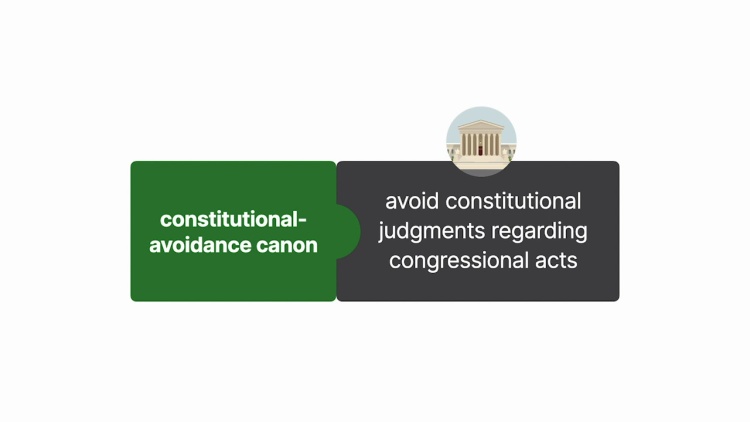
The constitutional-avoidance canon, sometimes called the constitutional-doubt canon, directs that, if at all possible, courts will interpret statutes to avoid...

Lessons

1. Welcome
  • Welcome
2. Federal Systems of Legislation & Regulation
  • The Federal Constitutional System of Legislation and Regulation
  • Overview of Sources of Federal Law
  • The Constitution and Legislative Power
3. Federal Legislative Processes
  • How a Bill Becomes a Law
  • Delegation of Congressional Lawmaking Power to Agencies I
  • Delegation of Congressional Lawmaking and Judicial Power to Agencies II
4. Statutory Interpretation
  • Philosophical Views of the Judiciary’s Role and Common Interpretive Problems
  • Differing Theories of Statutory Interpretation
  • Legislative History and its Use in Interpreting Statutes
  • Canons of Statutory Interpretation I
  • Canons of Statutory Interpretation II
  • Canons of Statutory Interpretation III
  • Canons of Statutory Interpretation IV
5. Agency Action, State Processes, & Courts
  • The History and Evolution of the Administrative State
  • Federal Regulatory Processes
  • Executive Branch Control of Agencies and Judicial Review of Agency Action
  • Judicial Review of Agency Action Under the APA
  • State Legislative & Administrative Processes
  • Judicial Process