



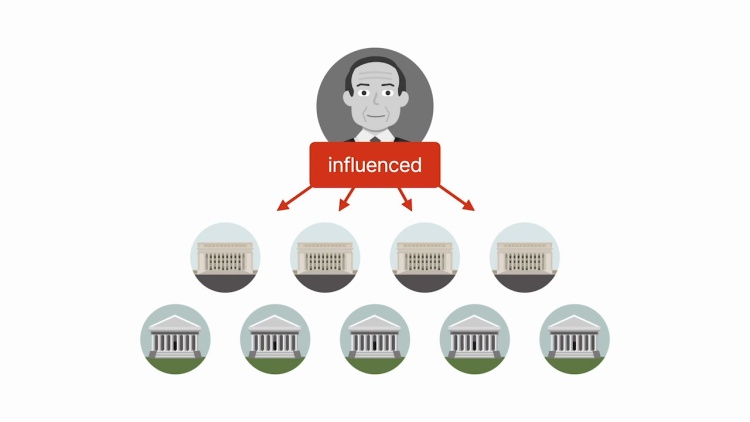
Play video

Legislative History and its Use in Interpreting Statutes

Learn about the use of legislative history in interpreting statutes and sources of legislative history.

Transcript

I. Introduction

One of the primary differences between textualism and the other philosophical schools of statutory interpretation concerns the use of legislative history in determining a statute’s meaning. Most of the schools encourage the examination of legislative history. Countless judicial decisions, including Supreme Court decisions, have cited statutes’ legislative histories in various ways.

But textualism doesn’t rely on legislative history. Former Supreme Court Justice Antonin Scalia, a...

Lessons

1. Welcome
  • Welcome
2. Federal Systems of Legislation & Regulation
  • The Federal Constitutional System of Legislation and Regulation
  • Overview of Sources of Federal Law
  • The Constitution and Legislative Power
3. Federal Legislative Processes
  • How a Bill Becomes a Law
  • Delegation of Congressional Lawmaking Power to Agencies I
  • Delegation of Congressional Lawmaking and Judicial Power to Agencies II
4. Statutory Interpretation
  • Philosophical Views of the Judiciary’s Role and Common Interpretive Problems
  • Differing Theories of Statutory Interpretation
  • Legislative History and its Use in Interpreting Statutes
  • Canons of Statutory Interpretation I
  • Canons of Statutory Interpretation II
  • Canons of Statutory Interpretation III
  • Canons of Statutory Interpretation IV
5. Agency Action, State Processes, & Courts
  • The History and Evolution of the Administrative State
  • Federal Regulatory Processes
  • Executive Branch Control of Agencies and Judicial Review of Agency Action
  • Judicial Review of Agency Action Under the APA
  • State Legislative & Administrative Processes
  • Judicial Process