



Play video

Delegation of Congressional Lawmaking and Judicial Power to Agencies II

Learn about more tools that Congress uses to delegate and constrain lawmaking power, and how Congress delegates judicial power to agencies.

Transcript

I. Introduction

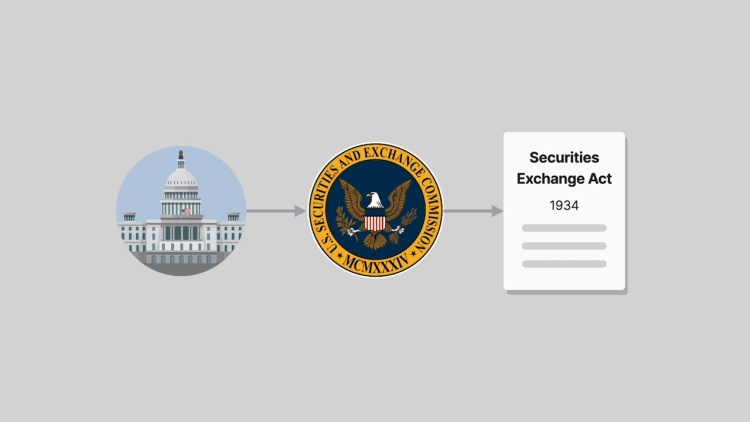
Federal agencies are born, live, operate, and sometimes die, by statute. In this lesson, we’ll consider some of the ways that Congress regulates and oversees administrative agencies. We’ll also look at how Congress delegates judicial decision-making power to agencies.

II. Enabling Legislation

The most important source of legal authority for an agency is the original enabling statute, sometimes called an agency’s organic statute. In it, Congress creates the agency, describes what...

Lessons

1. Welcome
  • Welcome
2. Federal Systems of Legislation & Regulation
  • The Federal Constitutional System of Legislation and Regulation
  • Overview of Sources of Federal Law
  • The Constitution and Legislative Power
3. Federal Legislative Processes
  • How a Bill Becomes a Law
  • Delegation of Congressional Lawmaking Power to Agencies I
  • Delegation of Congressional Lawmaking and Judicial Power to Agencies II
4. Statutory Interpretation
  • Philosophical Views of the Judiciary’s Role and Common Interpretive Problems
  • Differing Theories of Statutory Interpretation
  • Legislative History and its Use in Interpreting Statutes
  • Canons of Statutory Interpretation I
  • Canons of Statutory Interpretation II
  • Canons of Statutory Interpretation III
  • Canons of Statutory Interpretation IV
5. Agency Action, State Processes, & Courts
  • The History and Evolution of the Administrative State
  • Federal Regulatory Processes
  • Executive Branch Control of Agencies and Judicial Review of Agency Action
  • Judicial Review of Agency Action Under the APA
  • State Legislative & Administrative Processes
  • Judicial Process