



Play video

The Federal Constitutional System of Legislation and Regulation

Learn about the separation of powers into three branches of the federal government, and the sources of federal law.

Transcript

I. Introduction

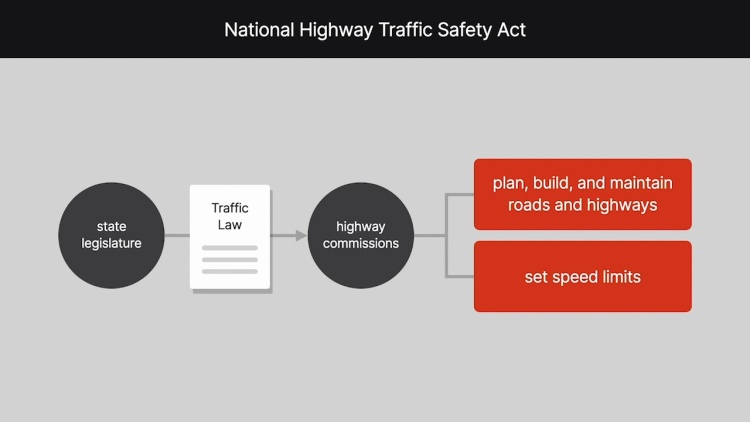
The laws that most commonly affect and regulate our daily lives are made up of legislation, enacted by Congress, state legislatures, and local legislative units such as city councils, and administrative regulations, promulgated by administrative agencies at all levels of government. For example, Congress enacted the National Highway Traffic Safety Act in 1966. Pursuant to that act, the National Highway Traffic Safety Administration develops and enforces Federal Motor Vehicle...

Lessons

1. Welcome
  • Welcome
2. Federal Systems of Legislation & Regulation
  • The Federal Constitutional System of Legislation and Regulation
  • Overview of Sources of Federal Law
  • The Constitution and Legislative Power
3. Federal Legislative Processes
  • How a Bill Becomes a Law
  • Delegation of Congressional Lawmaking Power to Agencies I
  • Delegation of Congressional Lawmaking and Judicial Power to Agencies II
4. Statutory Interpretation
  • Philosophical Views of the Judiciary’s Role and Common Interpretive Problems
  • Differing Theories of Statutory Interpretation
  • Legislative History and its Use in Interpreting Statutes
  • Canons of Statutory Interpretation I
  • Canons of Statutory Interpretation II
  • Canons of Statutory Interpretation III
  • Canons of Statutory Interpretation IV
5. Agency Action, State Processes, & Courts
  • The History and Evolution of the Administrative State
  • Federal Regulatory Processes
  • Executive Branch Control of Agencies and Judicial Review of Agency Action
  • Judicial Review of Agency Action Under the APA
  • State Legislative & Administrative Processes
  • Judicial Process