




Calder v. Bull
United States Supreme Court
3 U.S. (3 Dall.) 386 (1798)

- Written by Brent Newton, JD
Facts
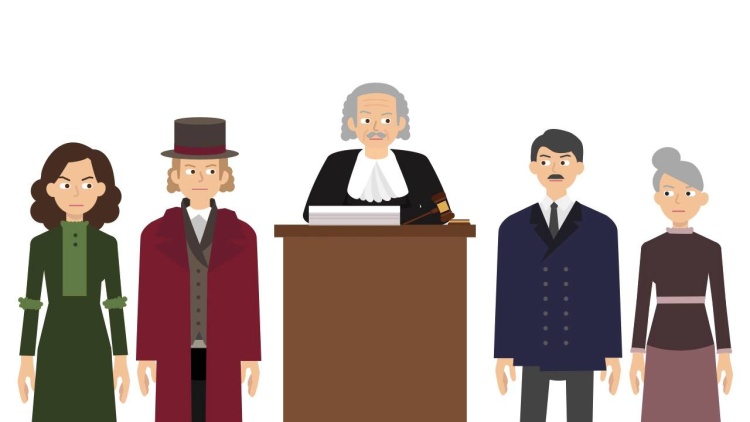
Abigail Bull was the beneficiary of Normand Morrison’s will. After Morrison died, Janet Calder claimed that the will was invalid and that she was entitled to Morrison’s estate under Connecticut’s law of intestate succession. A lawsuit between Calder and Bull ensued in Connecticut probate court. Under the law at the time, the women’s husbands, John Calder (plaintiff) and Caleb Bull (defendant), had to be named as parties in the lawsuit on behalf of their wives. The probate court ruled that the will was invalid, meaning the Calders would inherit Morrison’s estate. After the Bulls’ time for appealing the probate court’s judgment lapsed, they petitioned the Connecticut legislature to pass a resolution that voided the probate court’s decision and allowed for a new trial. The legislature passed it. At the new trial, the probate court ruled in favor of the Bulls. The Calders appealed the probate court’s ruling on the grounds that the new law was an ex post facto law, i.e., a retroactive law, that violated the United States Constitution. The Connecticut superior court and supreme court each affirmed the ruling for the Bulls. The Calders appealed to the United States Supreme Court.
Rule of Law
Issue
Holding and Reasoning (Chase, J.)
Concurrence (Paterson, J.)
Concurrence (Iredell, J.)
What to do next…
Here's why 964,000 law students have relied on our case briefs:
- Written by law professors and practitioners, not other law students. 47,500 briefs, keyed to 1,006 casebooks. Top-notch customer support.
- The right amount of information, includes the facts, issues, rule of law, holding and reasoning, and any concurrences and dissents.
- Access in your classes, works on your mobile and tablet. Massive library of related video lessons and high quality multiple-choice questions.
- Easy to use, uniform format for every case brief. Written in plain English, not in legalese. Our briefs summarize and simplify; they don’t just repeat the court’s language.
- AI-generated podcast version of every brief — listen on the go, between classes, or whenever reading isn’t an option. New
Understand your casebook readings in seconds
Use our case briefs to comprehend your casebook readings faster, supplement your notes and outlines, and outshine your peers in class.
Get instant access to over 47,500+ expert-written case briefs in a searchable database keyed to 1,006 law school casebooks.