





Caminetti v. United States
United States Supreme Court
242 U.S. 470, 37 S.Ct. 192, 61 L.Ed. 442 (1916)

- Written by Rich Walter, JD
Facts
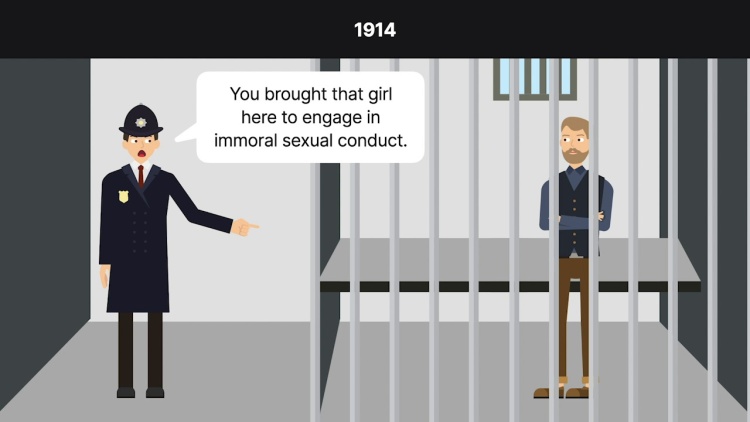
Pursuant to its authority under the federal Constitution's Commerce Clause, Congress enacted a statute entitled the White Slave Traffic Act. The statute's plainly worded text forbade the interstate transportation of women for prostitution or any other immoral purpose. The statute did not require that the offenses be conducted for commercial gain. The United States government (plaintiff) alleged that, for no commercial reason, Caminetti, Diggs, and Hays (defendants) each violated the statute. The men were tried separately and convicted. On appeal, the men argued that the statute was inapplicable because it prohibited only those acts conducted for commercial gain. Appellate courts affirmed each conviction. The United States Supreme Court granted certiorari and consolidated the cases.
Rule of Law
Issue
Holding and Reasoning (Day, J.)
Dissent (McKenna, J.)
What to do next…
Here's why 966,000 law students have relied on our case briefs:
- Written by law professors and practitioners, not other law students. 47,500 briefs, keyed to 1,007 casebooks. Top-notch customer support.
- The right amount of information, includes the facts, issues, rule of law, holding and reasoning, and any concurrences and dissents.
- Access in your classes, works on your mobile and tablet. Massive library of related video lessons and high quality multiple-choice questions.
- Easy to use, uniform format for every case brief. Written in plain English, not in legalese. Our briefs summarize and simplify; they don’t just repeat the court’s language.
- AI-generated podcast version of every brief — listen on the go, between classes, or whenever reading isn’t an option. New
Understand your casebook readings in seconds
Use our case briefs to comprehend your casebook readings faster, supplement your notes and outlines, and outshine your peers in class.
Get instant access to over 47,500+ expert-written case briefs in a searchable database keyed to 1,007 law school casebooks.
