




Free Speech Coalition, Inc. v. Paxton
United States Supreme Court
606 U.S. __ (2025)
- Written by Abby Roughton, JD
Facts
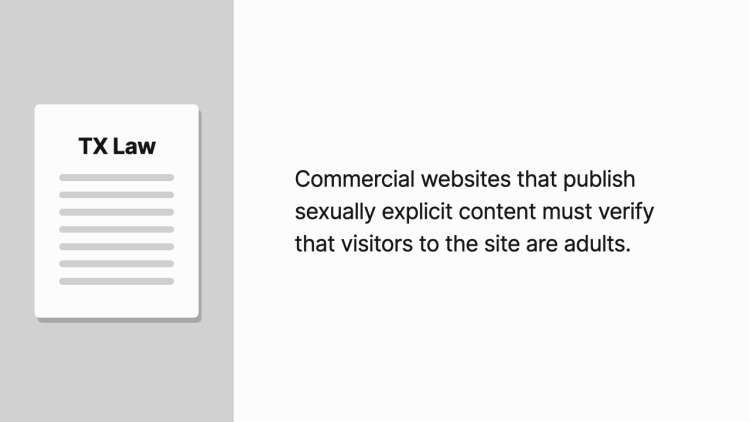
In 2023, Texas enacted a law imposing age-verification requirements on commercial websites that published or distributed sexual material harmful to minors, a statutorily defined category that included certain descriptions or depictions of sex acts. The law required such websites to use reasonable measures to verify that website visitors were 18 years of age or older. Acceptable verification methods included government-issued identification or transactional data (e.g., data associated with mortgage records). In enacting the law, the Texas Legislature cited concerns that the internet had made hardcore pornographic content and videos too accessible to minors, which contributed to potential pornography addiction, negative psychological effects, and risky sexual behaviors. Pornography-industry trade association Free Speech Coalition, along with others in the pornography industry (collectively, the coalition) (plaintiffs) sued Texas Attorney General Ken Paxton (defendant) to enjoin enforcement of the law. The coalition asserted that the law was facially unconstitutional under the First Amendment because adults had the right to access the sexually explicit material and the law interfered with the exercise of that right. The district court granted a preliminary injunction, finding that the law was subject to strict scrutiny but failed to satisfy that standard because it was not narrowly tailored and the least restrictive means of advancing the state’s compelling interest in preventing minors from accessing pornography. The United States Court of Appeals for the Fifth Circuit vacated the injunction, holding that the law was subject only to rational-basis review and satisfied that standard. The United States Supreme Court granted certiorari.
Rule of Law
Issue
Holding and Reasoning (Thomas, J.)
Dissent (Kagan, J.)
What to do next…
Here's why 964,000 law students have relied on our case briefs:
- Written by law professors and practitioners, not other law students. 47,500 briefs, keyed to 1,006 casebooks. Top-notch customer support.
- The right amount of information, includes the facts, issues, rule of law, holding and reasoning, and any concurrences and dissents.
- Access in your classes, works on your mobile and tablet. Massive library of related video lessons and high quality multiple-choice questions.
- Easy to use, uniform format for every case brief. Written in plain English, not in legalese. Our briefs summarize and simplify; they don’t just repeat the court’s language.
- AI-generated podcast version of every brief — listen on the go, between classes, or whenever reading isn’t an option. New
Understand your casebook readings in seconds
Use our case briefs to comprehend your casebook readings faster, supplement your notes and outlines, and outshine your peers in class.
Get instant access to over 47,500+ expert-written case briefs in a searchable database keyed to 1,006 law school casebooks.