




In re Estate of Beale
Wisconsin Supreme Court
15 Wis. 2d 546, 113 N.W.2d 380 (1962)
- Written by Paul Neel, JD
Facts
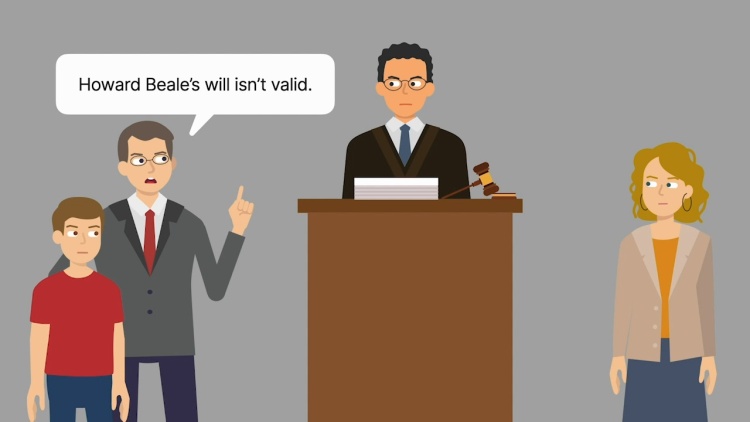
Beale dictated a 14-page will to his secretary. The will disinherited Beale’s son, Thomas (plaintiff). Beale then traveled from Wisconsin to New York with two of his other sons, taking the will with him. While in New York, Beale executed the will before three witnesses, who also signed it. The will’s pages were not fastened together. Beale and his two sons left New York for Moscow. A few days after executing the will, Beale wrote a letter on Columbia University stationery to his secretary asking her to make several changes to pages 12 and 13 of the will. Beale included the pages with his handwritten edits in the same envelope as the letter. Beale’s secretary retyped pages 12 and 13 and returned them to Beale in Moscow. Months later, Beale returned to Wisconsin and asked his secretary to retype the pages on the same typewriter that she had used to type the will. Before Beale’s secretary could retype the pages, Beale died. Thomas contested the will, alleging Beale’s changes to the will revealed his lack of testamentary intent. The estate’s beneficiaries (defendants) claimed that, despite these changes, Beale intended to make a valid will. The trial court ruled for the beneficiaries. Thomas appealed.
Rule of Law
Issue
Holding and Reasoning (Brown, J.)
Dissent (Currie, J.)
What to do next…
Here's why 955,000 law students have relied on our case briefs:
- Written by law professors and practitioners, not other law students. 47,500 briefs, keyed to 1,006 casebooks. Top-notch customer support.
- The right amount of information, includes the facts, issues, rule of law, holding and reasoning, and any concurrences and dissents.
- Access in your classes, works on your mobile and tablet. Massive library of related video lessons and high quality multiple-choice questions.
- Easy to use, uniform format for every case brief. Written in plain English, not in legalese. Our briefs summarize and simplify; they don’t just repeat the court’s language.
- AI-generated podcast version of every brief — listen on the go, between classes, or whenever reading isn’t an option. New