




In re Prudential Insurance Co. Sales Practices Litigation
United States Court of Appeals for the Third Circuit
148 F.3d 283 (1998)
- Written by Salina Kennedy, JD
Facts
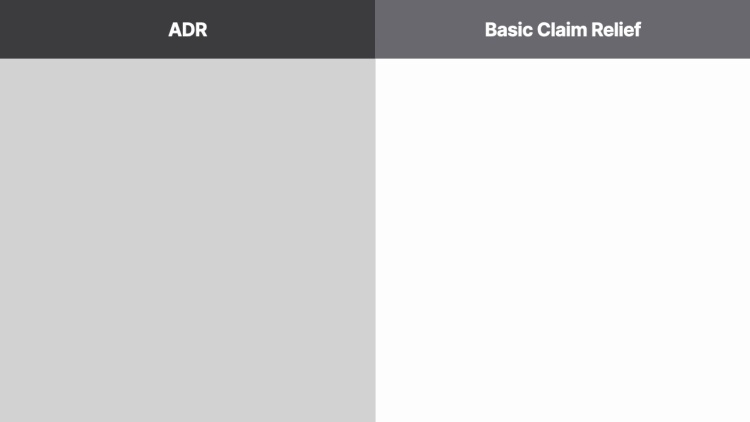
A class of approximately eight million policyholders (policyholders) (plaintiffs) sued Prudential Insurance Company (Prudential) (defendant), alleging that Prudential had engaged in deceptive sales practices. Early in the litigation, Prudential approached the policyholders’ lead counsel to initiate settlement negotiations, but counsel declined to negotiate until the facts of the lawsuit had been sufficiently developed. After extensive discovery, as well as the filing and argument of numerous motions, the parties reached a settlement agreement pursuant to which class members would elect one of two methods for resolving their claims. Under the first method, dubbed Alternative Dispute Resolution (ADR), a policyholder could submit evidence of Prudential’s liability and potentially be eligible for full compensatory relief. Claims resolved pursuant to ADR were subject to a four-tiered review process involving both specially trained Prudential employees and independent reviewers. Prudential’s liability for ADR claims was not capped. Under the second method, dubbed Basic Claim Relief, policyholders were entitled to a variety of forms of noncompensatory relief without demonstrating liability. The district court approved the settlement agreement and provided notice to the policyholders. Three hundred policyholders objected and approximately 0.2 percent of the class opted out of the settlement. One objector appealed the district court’s approval of the settlement agreement.
Rule of Law
Issue
Holding and Reasoning (Scirica, J.)
What to do next…
Here's why 950,000 law students have relied on our case briefs:
- Written by law professors and practitioners, not other law students. 47,400 briefs, keyed to 1,004 casebooks. Top-notch customer support.
- The right amount of information, includes the facts, issues, rule of law, holding and reasoning, and any concurrences and dissents.
- Access in your classes, works on your mobile and tablet. Massive library of related video lessons and high quality multiple-choice questions.
- Easy to use, uniform format for every case brief. Written in plain English, not in legalese. Our briefs summarize and simplify; they don’t just repeat the court’s language.
- AI-generated podcast version of every brief — listen on the go, between classes, or whenever reading isn’t an option. New