Irvin v. City of Shaker Heights
United States District Court for the Northern District of Ohio
809 F. Supp. 2d 719 (2011)
- Written by Robert Cane, JD
Facts
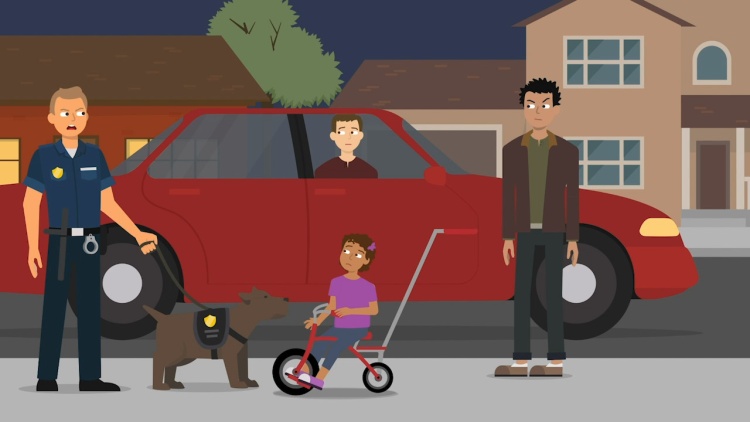
Rodney Irvin (plaintiff) was walking home one night with his daughter. Irvin stopped to have a conversation with Bob Nance, who passed by Irvin in a vehicle. Nance handed Irvin his business card. There was a police car driven by Sergeant Mastnardo (defendant) stopped behind Nance, so Irvin suggested that Nance drive onto a side street to continue their conversation. Nance drove onto the side street, and Mastnardo followed. Not realizing that the two men had merely passed a business card, Mastnardo believed Nance and Irvin were engaged in a drug transaction because they were in a high-crime area. Mastnardo parked his car across the street from Nance and Irvin and got out of his vehicle. Mastnardo approached Irvin and Nance to stop them and question them. The interaction between Mastnardo and Irvin quickly became confrontational, and they became involved in a physical altercation. At some point, Mastnardo’s canine partner was released from Mastnardo’s vehicle and bit Irvin. Irvin claimed that Mastnardo also hit him in the head with a hard object in addition to punching and kneeing him. Eventually, other officers arrived on scene and subdued Irvin. Irvin sued Mastnardo, among other defendants, for unreasonable seizure, the use of excessive force, illegal arrest, and other claims. Mastnardo moved for summary judgment.
Rule of Law
Issue
Holding and Reasoning (Oliver, C.J.)
What to do next…
Here's why 951,000 law students have relied on our case briefs:
- Written by law professors and practitioners, not other law students. 47,400 briefs, keyed to 1,004 casebooks. Top-notch customer support.
- The right amount of information, includes the facts, issues, rule of law, holding and reasoning, and any concurrences and dissents.
- Access in your classes, works on your mobile and tablet. Massive library of related video lessons and high quality multiple-choice questions.
- Easy to use, uniform format for every case brief. Written in plain English, not in legalese. Our briefs summarize and simplify; they don’t just repeat the court’s language.
- AI-generated podcast version of every brief — listen on the go, between classes, or whenever reading isn’t an option. New