





McKeague v. One World Technologies, Inc.
United States Court of Appeals for the First Circuit
858 F.3d 703 (2017)
- Written by Rose VanHofwegen, JD
Facts
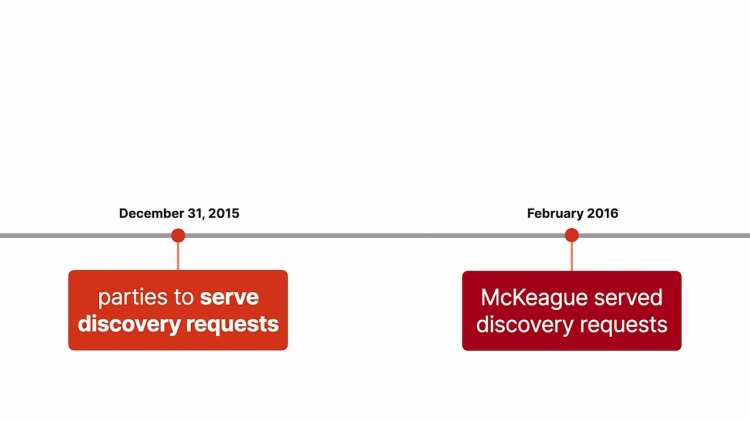
After injuring his hand using a table saw, Todd McKeague (plaintiff) brought a design-defect product-liability lawsuit against manufacturer One World Technologies, Inc. (defendant). The parties filed a discovery plan setting all the case deadlines, which the court approved and adopted as a scheduling order. But after filing initial disclosures, McKeague’s two attorneys did nothing to prosecute his case and missed the deadline to propound discovery. Worse yet, they did not retain an expert, a necessity to get to trial in a design-defect suit alleging a product that functioned properly had a defect not readily identifiable by a layperson. When One World Technologies requested summary judgment on that ground, McKeague’s attorneys asked for a second chance. The judge reopened discovery and pushed back the expired deadline for McKeague to respond to the summary-judgment motion. But the new deadline came and went with nothing filed. Two days later, the court dismissed the case for failure to prosecute. McKeague’s attorneys requested reconsideration, claiming he had just retained an expert who needed more time to review documents the other side purportedly produced one day late. Unimpressed, the judge refused reconsideration. McKeague appealed, arguing the delay did not warrant dismissing the case.
Rule of Law
Issue
Holding and Reasoning (Kayatta, J.)
What to do next…
Here's why 956,000 law students have relied on our case briefs:
- Written by law professors and practitioners, not other law students. 47,500 briefs, keyed to 1,006 casebooks. Top-notch customer support.
- The right amount of information, includes the facts, issues, rule of law, holding and reasoning, and any concurrences and dissents.
- Access in your classes, works on your mobile and tablet. Massive library of related video lessons and high quality multiple-choice questions.
- Easy to use, uniform format for every case brief. Written in plain English, not in legalese. Our briefs summarize and simplify; they don’t just repeat the court’s language.
- AI-generated podcast version of every brief — listen on the go, between classes, or whenever reading isn’t an option. New


