




Old Chief v. United States
United States Supreme Court
519 U.S. 172 (1997)

- Written by Sean Carroll, JD
Facts
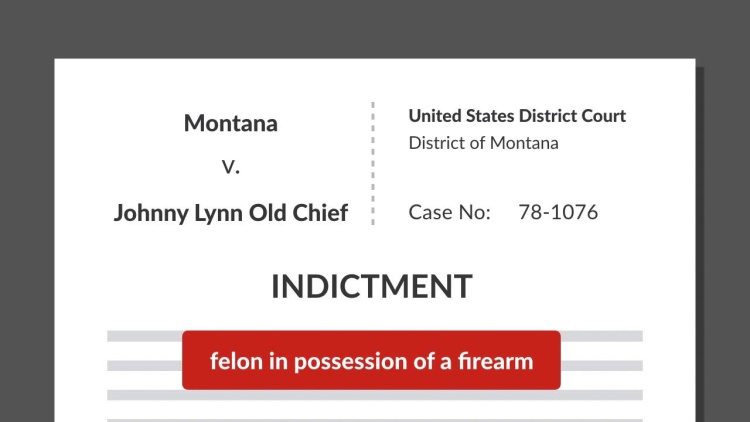
In 1988, Johnny Old Chief (defendant) was convicted of assault and sentenced to five years’ imprisonment. In 1993, Old Chief was involved in an armed altercation. He was charged with assault with a dangerous weapon and violation of 18 U.S.C. § 922(g)(1), which prohibited possession of a firearm by anyone previously convicted of a crime punishable by more than one year’s imprisonment. The prosecution was entitled to prove the prior conviction using the record of prior judgment or similar evidence. However, Old Chief feared that the record might prejudice the jury. He therefore offered to stipulate to his prior conviction, agreeing with the prosecution that the fact was uncontested. He sought a jury instruction saying that he had been previously convicted of a qualifying crime and an order prohibiting the prosecution from otherwise offering evidence of his prior conviction. The prosecution refused to enter a stipulation, arguing that it was entitled to prove its case how it deemed fit. The district court agreed and allowed the prosecution to introduce the record into evidence. Old Chief was convicted. The Ninth Circuit affirmed, upholding the district court’s decision to admit the record into evidence. The United States Supreme Court granted certiorari.
Rule of Law
Issue
Holding and Reasoning (Souter, J.)
Dissent (O’Connor, J.)
What to do next…
Here's why 955,000 law students have relied on our case briefs:
- Written by law professors and practitioners, not other law students. 47,500 briefs, keyed to 1,006 casebooks. Top-notch customer support.
- The right amount of information, includes the facts, issues, rule of law, holding and reasoning, and any concurrences and dissents.
- Access in your classes, works on your mobile and tablet. Massive library of related video lessons and high quality multiple-choice questions.
- Easy to use, uniform format for every case brief. Written in plain English, not in legalese. Our briefs summarize and simplify; they don’t just repeat the court’s language.
- AI-generated podcast version of every brief — listen on the go, between classes, or whenever reading isn’t an option. New