United States v. Skrmetti
United States Supreme Court
605 U.S. _____ (2025)
- Written by Abby Roughton, JD
Facts
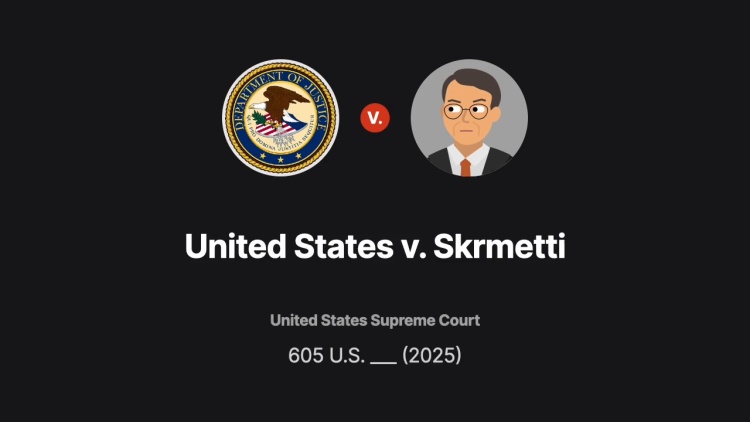
In 2023, Tennessee enacted SB1, which prohibited certain medical treatments for transgender minors. Among other things, SB1 barred healthcare providers from prescribing puberty blockers or hormones to address gender dysphoria, gender identity disorder, or gender incongruence. SB1 did not prevent healthcare providers from administering treatments to individuals aged 18 and older, nor did it prevent the use of puberty blockers or hormones in minors to treat other conditions. In enacting SB1, the Tennessee legislature cited the potential negative physical and psychological effects of the barred medical treatments. The legislature believed that minors were not mature enough to appreciate those consequences and found that gender dysphoria in minors could be resolved by less-invasive approaches. The legislature also noted a lack of certainty about the treatments’ effects, changing guidelines regarding the treatments, and increased restrictions on the treatments in other countries. Three transgender minors, their parents, and a doctor (the challengers) (plaintiffs) sued Tennessee Attorney General Jonathan Skrmetti (defendant) in federal court to prevent enforcement of SB1, asserting that SB1 violated the Equal Protection Clause of the Fourteenth Amendment. The challengers described the negative effects of gender dysphoria on transgender minors and their families and presented evidence that multiple professional organizations considered the banned treatments to be appropriate and medically necessary. The United States (plaintiff) intervened in the action to challenge SB1. The district court enjoined SB1’s ban on puberty blockers and hormone treatments, finding that SB1 discriminated based on sex and transgender status and likely would not survive intermediate-scrutiny review. The appellate court reversed, finding that transgender individuals were not a suspect class and that SB1 did not discriminate based on sex. The appellate court thus analyzed SB1 using rational-basis review and held that SB1 met that standard. The United States Supreme Court granted certiorari.
Rule of Law
Issue
Holding and Reasoning (Roberts, C.J.)
Concurrence (Thomas, J.)
Concurrence (Barrett, J.)
Concurrence (Alito, J.)
Dissent (Sotomayor, J.)
Dissent (Kagan, J.)
What to do next…
Here's why 964,000 law students have relied on our case briefs:
- Written by law professors and practitioners, not other law students. 47,500 briefs, keyed to 1,006 casebooks. Top-notch customer support.
- The right amount of information, includes the facts, issues, rule of law, holding and reasoning, and any concurrences and dissents.
- Access in your classes, works on your mobile and tablet. Massive library of related video lessons and high quality multiple-choice questions.
- Easy to use, uniform format for every case brief. Written in plain English, not in legalese. Our briefs summarize and simplify; they don’t just repeat the court’s language.
- AI-generated podcast version of every brief — listen on the go, between classes, or whenever reading isn’t an option. New
Understand your casebook readings in seconds
Use our case briefs to comprehend your casebook readings faster, supplement your notes and outlines, and outshine your peers in class.
Get instant access to over 47,500+ expert-written case briefs in a searchable database keyed to 1,006 law school casebooks.