




Marshall v. ESPN
United States District Court for the Middle District of Tennessee
111 F. Supp. 3d 815 (2015)
- Written by Jenny Perry, JD
Facts
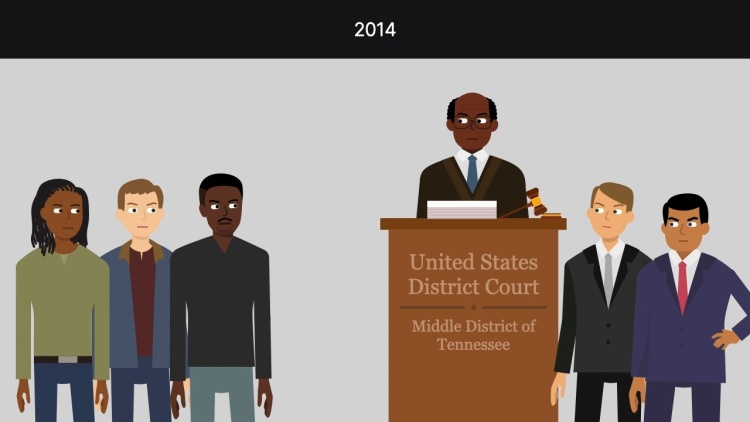
Javon Marshall (plaintiff) and other National Collegiate Athletic Association (NCAA) Division I football and basketball players (collectively, athletes) initiated a putative class action against ESPN Inc. (defendant) and other networks that broadcasted NCAA athletic competitions, various NCAA athletic conferences, and agencies involved in licensing college teams’ intellectual property (defendants), all of whom were alleged to have profited from the unauthorized use of the athletes’ names and likenesses. Under NCAA rules, only amateur athletes could participate in intercollegiate sports. The athletes would lose their eligibility to participate if they accepted payment or any kind of financial assistance in exchange for playing their sport, except in the limited ways permitted by NCAA rules. The athletes’ complaint alleged, among other things, that their rights of publicity had been violated and that the networks, athletic conferences, and licensing agencies had colluded with one another and with the NCAA, which was not named as a defendant, in violation of antitrust laws to fix the amount the athletes were paid for the licensing and use of their names and likenesses at zero or, at most, the cost of college attendance. The networks, athletic conferences, and licensing agencies filed motions to dismiss.
Rule of Law
Issue
Holding and Reasoning (Sharp, J.)
What to do next…
Here's why 955,000 law students have relied on our case briefs:
- Written by law professors and practitioners, not other law students. 47,500 briefs, keyed to 1,006 casebooks. Top-notch customer support.
- The right amount of information, includes the facts, issues, rule of law, holding and reasoning, and any concurrences and dissents.
- Access in your classes, works on your mobile and tablet. Massive library of related video lessons and high quality multiple-choice questions.
- Easy to use, uniform format for every case brief. Written in plain English, not in legalese. Our briefs summarize and simplify; they don’t just repeat the court’s language.
- AI-generated podcast version of every brief — listen on the go, between classes, or whenever reading isn’t an option. New