





The Marshall Trilogy
Learn about Johnson v. M’Intosh, Cherokee Nation v. Georgia, and Worcester v. Georgia, three Supreme Court cases that set the foundation for federal Indian law.
Transcript
I. Introduction
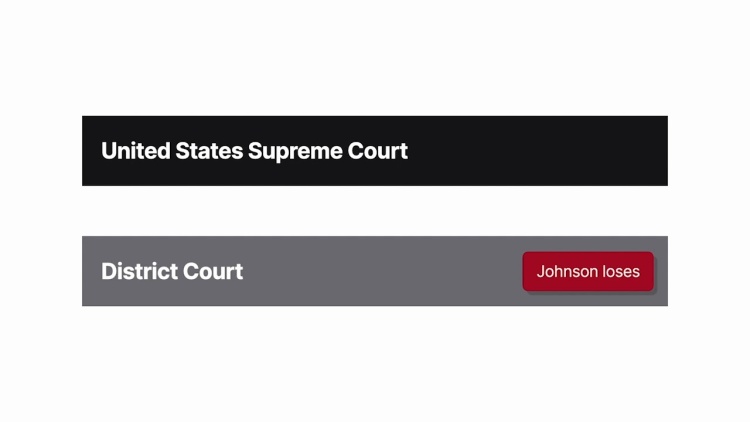
Indian law has been shaped over time by United States Supreme Court cases. In particular, three cases from the 1800s, authored by Chief Justice John Marshall, created the framework for federal Indian law that’s still used today. Johnson v. M’Intosh, 21 U.S. (8 Wheat.) 543 (1823); Cherokee Nation v. Georgia, 30 U.S. (5 Pet.) 1 (1831); and Worcester v. Georgia, 31 U.S. (6 Pet.) 515 (1832), referred to as the Marshall Trilogy, addressed the sovereignty of Indian...


