



Play video

Introduction to Negotiable Instruments

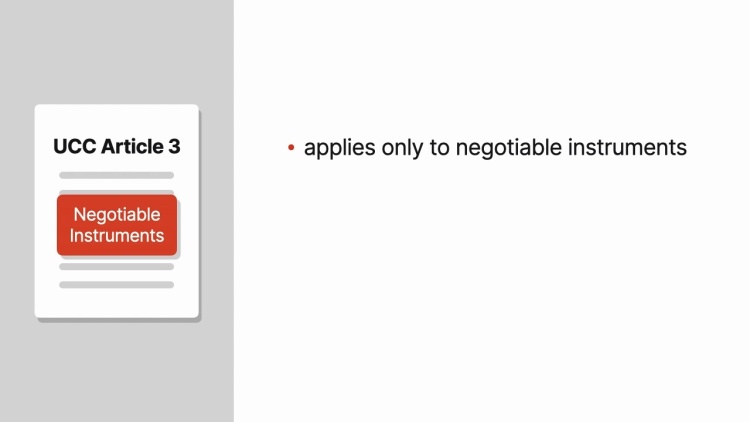
Learn about the role of negotiable instruments in commerce and the scope of UCC Articles 3 and 4, including the kinds of instruments to which Article 3 applies.

Transcript

When grabbing your morning coffee from a local shop, how do you prefer to pay? Cash, credit card, check? Indeed, there are many ways to pay for goods and services. These different methods of payment are simply known as payment systems.

Although cash is a widely accepted payment system, it should come as no surprise that most transactions nowadays are conducted using non-cash payment systems. In this course, we’ll focus on a traditional non-cash paper-based payment system: negotiable...

Lessons

1. Welcome
  • Welcome to Payment Systems
2. Negotiability
  • Introduction to Negotiable Instruments
  • Negotiability Requirements I
  • Negotiability Requirements II
  • Rule against Additional Terms
3. Key Terms in Article 3
  • Key Terms I
  • Key Terms II
  • Becoming a Holder
  • Negotiation
  • Indorsement
4. Enforcement of Negotiable Instruments
  • Holder in Due Course: Value and Good Faith
  • Holder in Due Course: Without Notice
  • Close-Connectedness Doctrine and Shelter Rule
  • Defenses against Enforcement
5. Liability on Negotiable Instruments
  • Obligations of the Parties
  • Instruments Taken for an Obligation
  • Accord and Satisfaction Using a Negotiable Instrument
  • Enforcement of Lost, Stolen, or Destroyed Instruments
  • Warranty Liability
6. Dishonor, Payment, and Discharge
  • Dishonor of Negotiable Instruments
  • Payment of Negotiable Instruments
  • Discharge of Liability
7. Misconduct and Mistake
  • Unauthorized Signatures and Alterations
  • The Negligence Rule
  • Imposters and Fictitious or Unintended Payees
  • Conversion of a Negotiable Instrument
8. Bank Deposits and Collections
  • Introduction to Article 4
  • Collection: Depositary and Collecting Banks
  • Collection: Payor Banks
  • Payor Bank’s Relationship to Its Customers