



Play video

Battle of the Forms

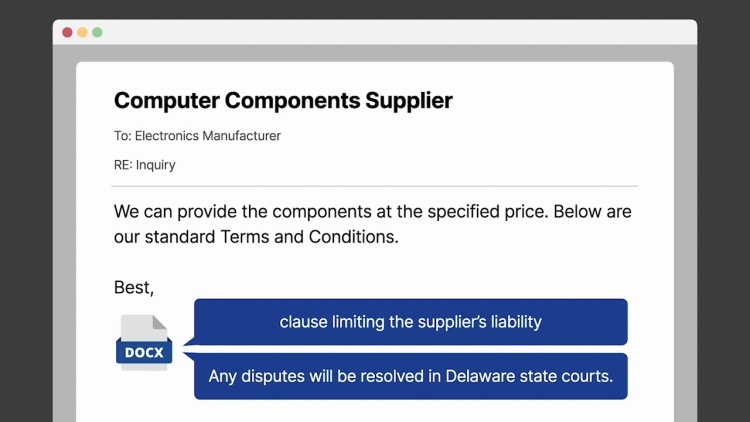
Learn about the rules to determine the substance of the parties’ contract if the parties exchange writings that don’t agree on all points.

Transcript

At common law, for a contract to be formed, the acceptance must exactly match the offer’s terms. If the purported acceptance alters or adds to the offer in any way, it’s treated as a rejection and counteroffer. This is known as the mirror-image rule.

Due to its rigid application, the mirror-image rule can hinder the efficient formation of contracts, particularly in modern commercial transactions. To address this issue, Article 2 rejects the mirror-image rule in favor of a more flexible...

Lessons

1. Welcome to Sales
  • Welcome to Sales
2. Introduction to UCC Article 2
  • Scope of Article 2: Transactions in Goods
  • Distinguishing Goods and Services Contracts
  • Key Terms in Article 2
3. Contract Formation and Modification
  • Contract Formation and Modification
  • Battle of the Forms
  • The Statute of Frauds
  • The Parol Evidence Rule
4. Contract Interpretation
  • Article 2 Gap-Fillers
  • Risk of Loss
  • Additional Interpretive Devices
5. Performance
  • The Perfect-Tender Rule and the Right to Cure
  • Inspection and Acceptance
  • Rejection and Revocation
6. Breach, Repudiation, and Excuse
  • Anticipatory Repudiation
  • Adequate Assurance
  • Impracticability of Performance
7. UCC Article 2 Warranties
  • Express Warranties
  • Implied Warranty of Merchantability
  • Implied Warranty of Fitness
  • Excluding and Modifying Warranties
8. Remedies
  • Seller's Remedies
  • Seller's Alternative Remedies
  • Buyer's Remedies for Nondelivery
  • Buyer's Remedies for Accepted Goods
  • Buyer's Incidental and Consequential Damages