





Antitrust
Learn about the uneasy relationship between labor law, which encourages collective activity, and antitrust law, which prohibits certain collective activity.
Transcript
Federal antitrust law seeks to prevent combinations or conspiracies to restrain interstate commerce. But labor law seeks to foster collaboration among employees and employers in matters affecting commerce. To reconcile these sometimes competing goals, certain antitrust-law exemptions apply to unions and employers.
I. The Statutory Exemption
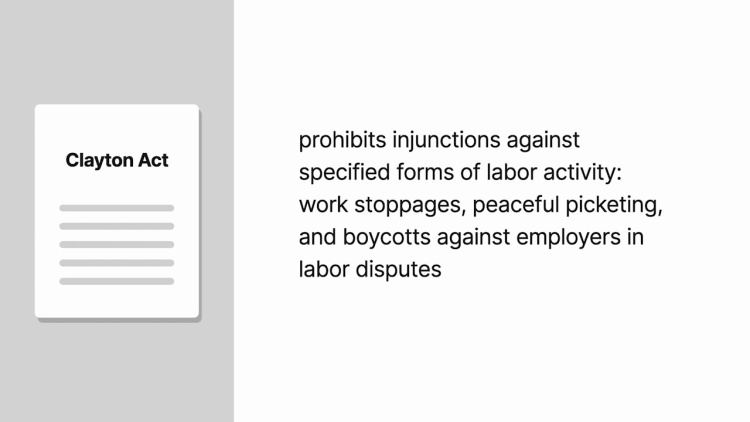
The so-called statutory exemption arises from the interaction of three federal statutes, namely the Sherman Antitrust Act, the Clayton Act, and the...


