



Play video

Bankruptcy Exemptions

Learn about property that the debtor may elect to exclude from the estate.

Transcript

Every state exempts specified assets from creditors' claims. Common examples include the debtor's home, car, tools of the trade, retirement benefits, life-insurance proceeds, alimony payments, and more. The Bankruptcy Code incorporates exemptions in § 522, which allows individual debtors to exempt specified assets from the estate.

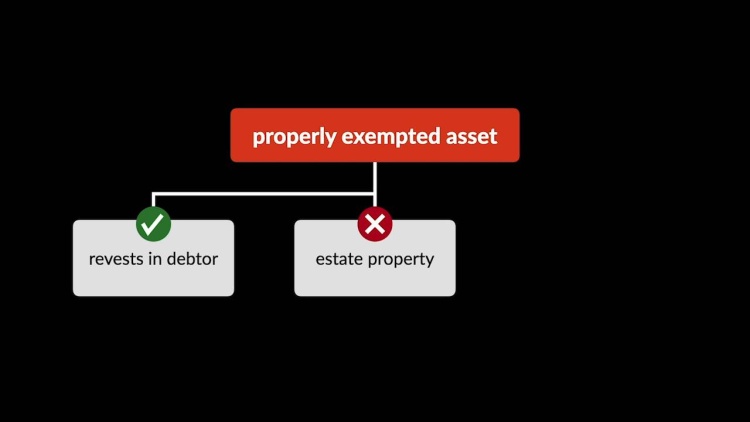
In bankruptcy, a properly exempted asset revests in the debtor and ceases to be estate property. But exemptions aren't automatic. To benefit from exemptions, the...

Lessons

1. Welcome to Bankruptcy
5. Chapter 7 Liquidation
  • Chapter 7 Panel Trustee
  • Distribution of Estate Property in Chapter 7
  • Discharge in Chapter 7
  • Personal-Property Collateral in Chapter 7
  • General Grounds to Dismiss a Chapter 7 Case
  • Introduction to the Means Test and Dismissals or Conversions for Abuse
6. Debt Adjustment in Chapter 13
  • Eligibility to File for Chapter 13
  • The Estate in Chapter 13
  • Introduction to the Chapter 13 Plan of Debt Adjustment
  • Terms Permitted in a Chapter 13 Plan
  • Chapter 13 Confirmation Requirements: Treatment of Secured Claims
  • Chapter 13 Confirmation Requirements: Treatment of Unsecured and Priority Claims
7. Preferences
  • Introduction to Preferences
  • A Transfer to a Creditor or for a Creditor's Benefit Made for or on Account of an Antecedent Debt
  • A Transfer Enabling a Creditor to Receive More Than It Would in Chapter 7
  • The Net-Benefit Rule
  • Contemporaneous Exchanges for New Value
  • Transfers in the Ordinary Course of Business
  • Subsequent New Value