



Play video

Terms Permitted in a Chapter 13 Plan

Learn about the various terms that the Bankruptcy Code permits, but does not require, to appear in a chapter 13 plan.

Transcript

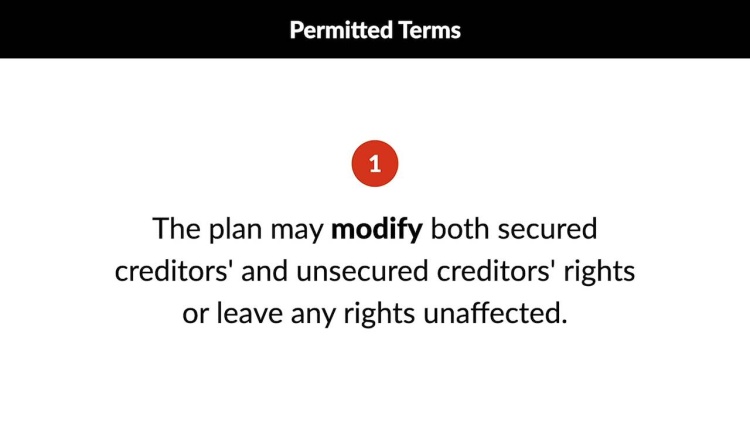
Section 1322(b) of the Bankruptcy Code features a litany of terms that may, but need not, appear in a chapter 13 plan. On their face, these provisions seem to give the debtor far-reaching power to adjust creditors' rights. But the many and varied requirements for plan confirmation, found mostly in § 1325, limit these powers, sometimes severely. We'll talk about the permitted terms in this lesson; the plan-confirmation requirements must await other lessons.

I. General Power to Modify Creditors'...

Lessons

1. Welcome to Bankruptcy
5. Chapter 7 Liquidation
  • Chapter 7 Panel Trustee
  • Distribution of Estate Property in Chapter 7
  • Discharge in Chapter 7
  • Personal-Property Collateral in Chapter 7
  • General Grounds to Dismiss a Chapter 7 Case
  • Introduction to the Means Test and Dismissals or Conversions for Abuse
6. Debt Adjustment in Chapter 13
  • Eligibility to File for Chapter 13
  • The Estate in Chapter 13
  • Introduction to the Chapter 13 Plan of Debt Adjustment
  • Terms Permitted in a Chapter 13 Plan
  • Chapter 13 Confirmation Requirements: Treatment of Secured Claims
  • Chapter 13 Confirmation Requirements: Treatment of Unsecured and Priority Claims
7. Preferences
  • Introduction to Preferences
  • A Transfer to a Creditor or for a Creditor's Benefit Made for or on Account of an Antecedent Debt
  • A Transfer Enabling a Creditor to Receive More Than It Would in Chapter 7
  • The Net-Benefit Rule
  • Contemporaneous Exchanges for New Value
  • Transfers in the Ordinary Course of Business
  • Subsequent New Value