



Play video

Subsequent New Value

Learn about the rule that a transfer may not be avoidable, even though it is a preference, if the creditor later provides new value to the debtor.

Transcript

I. Elements of the Subsequent-New-Value Defense

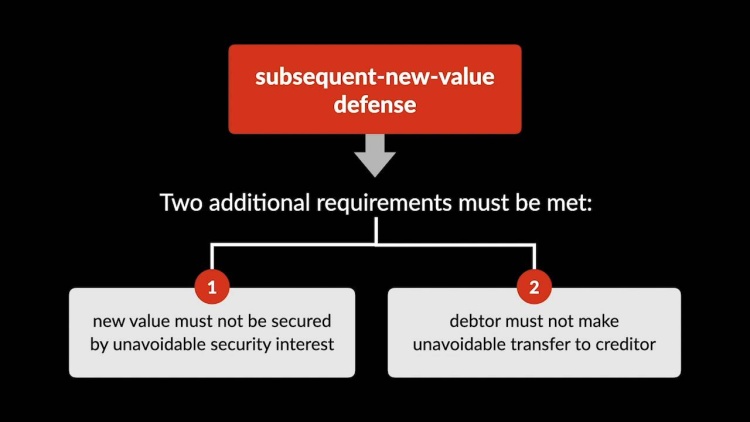
No prebankruptcy transfer from the debtor to a creditor is avoidable as a preference to the extent that, after the transfer, the creditor gave new value to the debtor or for the debtor's benefit. We defined new value in another lesson. But for the subsequent-new-value defense to apply, two additional requirements must be met, namely:

·      the new value must not be secured by an otherwise unavoidable security interest,...

Lessons

1. Welcome to Bankruptcy
5. Chapter 7 Liquidation
  • Chapter 7 Panel Trustee
  • Distribution of Estate Property in Chapter 7
  • Discharge in Chapter 7
  • Personal-Property Collateral in Chapter 7
  • General Grounds to Dismiss a Chapter 7 Case
  • Introduction to the Means Test and Dismissals or Conversions for Abuse
6. Debt Adjustment in Chapter 13
  • Eligibility to File for Chapter 13
  • The Estate in Chapter 13
  • Introduction to the Chapter 13 Plan of Debt Adjustment
  • Terms Permitted in a Chapter 13 Plan
  • Chapter 13 Confirmation Requirements: Treatment of Secured Claims
  • Chapter 13 Confirmation Requirements: Treatment of Unsecured and Priority Claims
7. Preferences
  • Introduction to Preferences
  • A Transfer to a Creditor or for a Creditor's Benefit Made for or on Account of an Antecedent Debt
  • A Transfer Enabling a Creditor to Receive More Than It Would in Chapter 7
  • The Net-Benefit Rule
  • Contemporaneous Exchanges for New Value
  • Transfers in the Ordinary Course of Business
  • Subsequent New Value